
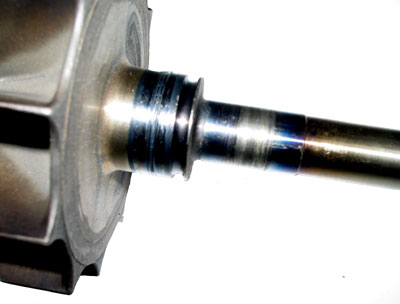
- Cause
- There can be several causes: lack of oil in the engine due to a fault (broken sump, poor maintenance, etc.), a broken or blocked oil feed pipe to the turbo, badly fitted gaskets blocking the oil inlet, or liquid gasket that hardens and blocks it (its use is forbidden and voids the warranty). Chemical contamination, which cannot be seen, also causes this failure; the most common is water or fuel mixed with the oil.
- What to check
- First, that the oil level and viscosity are correct; then the turbo oil feed and drain pipes, the condition and fitting of the gaskets, and that the oil pump works and delivers the correct pressure. Also check that there is no leak in the coolant passages that could reach the oil.
- Symptoms
- The engine loses power and gives off black smoke. The turbo may be noisy and, when the turbine wheel rubs against the housing, the housing can become red hot.
- Notes
- When the oil pump fails, lubrication is missing or the oil viscosity drops, the first part to fail is the turbo, the most delicate component of the engine: modern passenger car turbos exceed 200,000 rpm, and without proper lubrication they are destroyed very quickly.